

Friday Dispatch: Cloudy with a Chance of God
How do we read the signs?

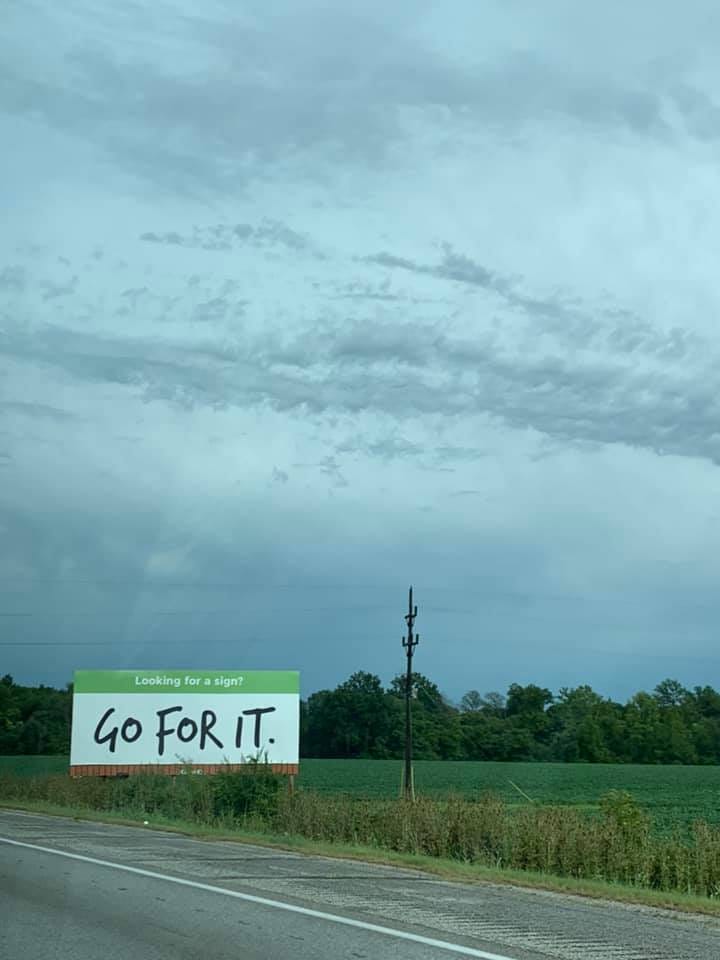
(Taken on a cross-country road trip in 2019. If only signs were usually this obvious.)
Friday greetings,
Once again, I’ll have the honor of leading Kabbalat Shabbat services this week at Temple Emanuel Sinai in Worcester, MA, substituting for my friend Rabbi Valerie Cohen. If you’d like to join via Livestream, we’ll begin at 6:30pm EST.
I thought I’d share here the d’var (“word of Torah”) I’ll be offering this evening, Cloudy with a Chance of God. Gratitude to Rabbi Valerie for the title :)

One of the earliest things most of us learn is how to tell time. Like many of you, I grew up with clock faces, the shorter hour hand, the longer minute hand, and perhaps even a third second hand. Together, we learned how to “read” this visual, a clear and simple way of determining the literal time of day.
Nowadays, we might gauge the time by glancing at our smartphones, Apple Watches, Oura Ring metrics, and Garmins. Or maybe, like my dog Chalupa, who wakes up from a deep sleep at 4:00 pm sharp for dinner, a powerful body clock alerts you when it is time to eat or sleep.
This is all well and good; the world would devolve into chaos if none of us knew what time it was. But during larger moments of change and transition, with less clear-cut data, how do we know when it’s time to stay put and when it’s time to keep moving?
In this week’s Torah portion (parasha), Beha’alotcha (Numbers 8:1–12:16), we see the Israelites continue their journey from Egypt to the Promised Land. It’s a long, arduous trip. Behind them lies enslavement, but also familiarity. Ahead, only more of the unknown. And in the meantime, they are asked to have faith.
Rabbi Elliot Kukla writes, “The Book of Numbers could be affectionately called the Book of Kvetch, as it is filled with complaining–the people remember slavery in Egypt fondly and regret their decision to move toward liberation.”
I can relate. Some of the most pivotal moments in my life have resulted from leaving circumstances that appeared comfortable, particularly in hindsight. It can be tempting to look back through rose-colored glasses at chapters of life that were not as ideal as we may recall during moments of scarcity or stress.
Numbers 9:16-23 gives us seven consecutive verses about the cloud that signaled the people when to encamp and when to set out again. “Whether it was two days or a month or a year—however long the cloud lingered over the Tabernacle—the Israelites remained encamped and did not set out; only when it lifted did they break camp.”
How nice to have such clear instructions, right?
But as I thought about it, the more I imagined it required something from the people. After all, a cloud by itself is a pretty foggy sign, forgive the pun.
They had to read the cloud, which meant noticing the cloud in the first place. Without awareness, it seems reasonable to imagine they could just as well have thought, “Huh, cloudy today.” Awareness alone, though, still wasn’t enough. They also had to assign meaning to the cloud. By itself, it may have just been the weather. But paired with perception and meaning-making, it became a powerful signal, a teller of time, and a conduit for faith.
Then, in the very next chapter, a second mechanism for time-telling and instruction-giving appears: “GOD spoke to Moses, saying: Have two silver trumpets made; make them of hammered work. They shall serve you to summon the community and to set the divisions in motion.” (Numbers 10:1-2)
The following verses elaborate on how to distinguish among the various uses of the trumpets. Both together, one alone, long blasts, short blasts – each of these distinctly directs the people, relating to everything from community assemblies to times of war to joyous festivals and new moons, so much so that “they shall be for you an institution for all time throughout the ages.” (Numbers 10:8)
Torah tells us we need ways of knowing what time it is in our lives. It’s an ancient and ongoing theme of being alive and trying to move toward better days. I’m reminded of a Tom Petty song:
Yeah, it’s time to move on, time to get going
What lies ahead, I have no way of knowing
But under my feet, baby, grass is growing
It’s time to move on, it’s time to get going
The tricky part is that it can be much harder to discern, in the wilderness of our individual lives, when to recommit and do the hard work of staying in a challenging relational moment or professional setting, and when to set off towards the unknown, with no guarantees of success and only faith and vapor to guide us.
After all, it’s no accident that Moses is so exasperated by leading an intractable people in this parasha that he cries out to God, desperate for help. Who among us hasn’t experienced moments of utter exhaustion and confusion, when certainty feels as elusive as the sky itself?
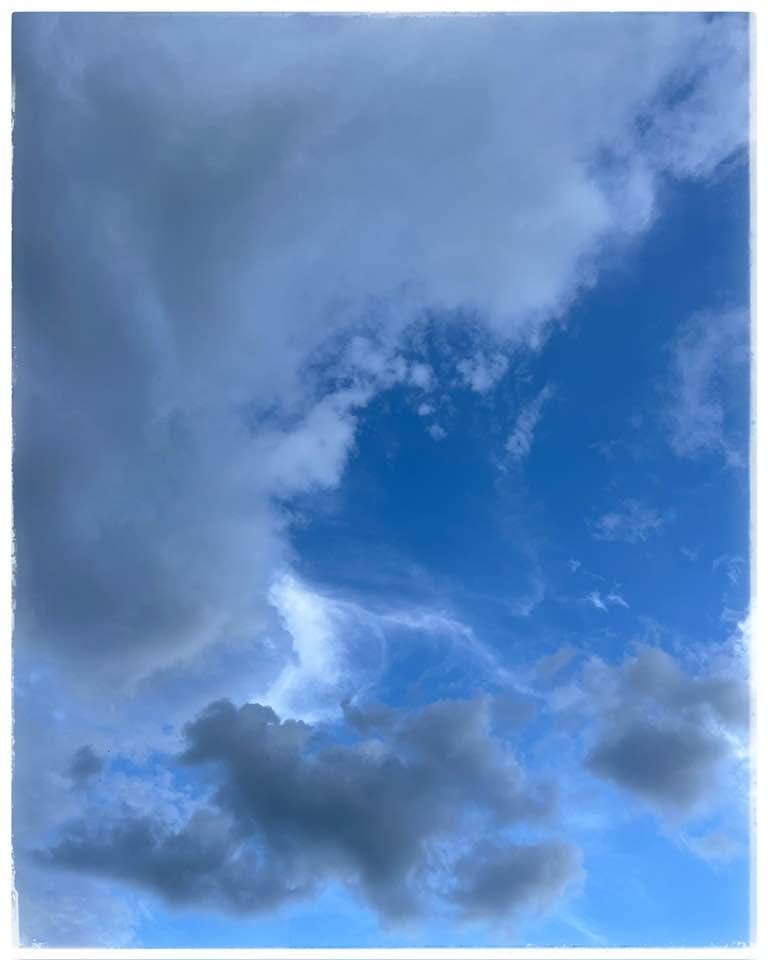
What if, during times of uncertainty and change, we remembered the power of awareness, meaning-making, and the need for support?
In her 1993 book, Parable of the Sower, Octavia Butler wrote:
All that you touch you Change.
All that you Change, changes you.
The only lasting truth is Change.
God is Change
My wish for you is that next time you feel you are in a fog and can’t see the way forward, you’ll know that both the cloud and the clearing are forms of divine protection and presence.
When you’re not sure what to do and which messages to listen to, take your time. Notice what meaning you are assigning to the “signs.” Reach out for help. And most importantly, remember that God’s guidance and timing come in many forms.
Watch for the cloud to lift. Listen for your trumpet to sound.
Shabbat Shalom and love,
Jena
Have thoughts? I’d love to hear them.
Did you appreciate this post?
Love this d’var Jena. As usual, our minds are churning with similar big questions. Were you listening in on my therapy session this week😆? I love how your teaching is ending up being a sign for me. Now I’m going to go back and read it again to discern more where it’s pointing. Shabbat shalom, friend.
In this book: Lest Innocent Blood Be Shed: The Story of the Village of Le Chambon and How Goodness Happened There by Philip P. Hallie, he says that in times of struggle, the aim is to "expand the blue." The cloud that guides needs blue sky around it. |