

After Seeing "Holding Liat"
Love and grief all over again

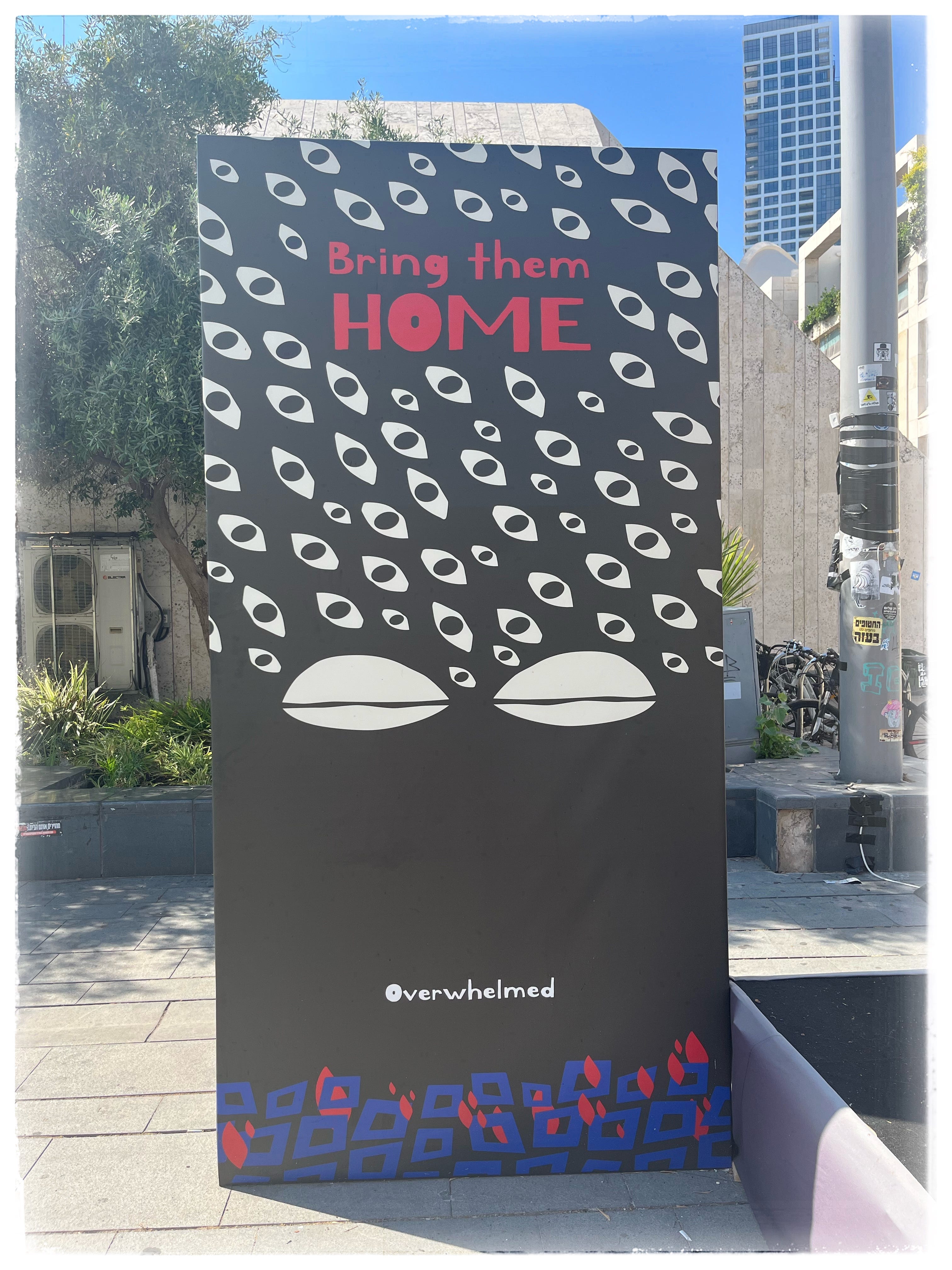
Hostages Square, Tel Aviv, July 2024
Last night, my sister, M.J., and I went to the Pioneer Valley Jewish Film Festival screening of Holding Liat, a documentary that follows the Beinin- Atzili families’ desperate wait to get their loved ones home from captivity in Gaza. The film was so powerful and complicated and beautiful and anguishing. Just minutes before we headed out for the evening, I had finished reading When We See You Again, Rachel Goldberg-Polin’s staggering memoir, so I am feeling steeped in the sorrow and complexity and love and grief all over again.
During the scene when Liat is reunited with her sister, who had flown to Israel from her home in Portland, Oregon, Liat sees Tal and screams ACHOTI!!! (My sister) as they embrace. My sister reached her hand out for mine, and we both squeezed hard as we watched these two middle-aged women who didn’t know if they’d ever see each other again.
The dynamic between Liat’s parents, Yehuda and Chaya, was so touching, too. The way they argued and processed their emotions so very differently, yet at the end of the day, held hands – and each other.
Yehuda reminded me a lot of my dad, actually. He dealt with his emotions by ranting about political leaders (or lack thereof) and trying to get them to listen to reason, to look for solutions. So when he broke down sobbing during the shiva for Aviv, Liat’s husband and his son-in-law, who had also been taken hostage but didn’t come home alive – oof. So painful.
That moment made me think about how especially poignant it is to see my dad cry, because it’s so rare. Sometimes you can sense his emotion just under the surface when he’s ranting about Trump or Bibi or telling you about some scene in a Shakespeare play about fathers and daughters. The man is pure heart inside of an intellect so capacious, sometimes it’s hard to fathom.
The producer, Lance Kramer, was there to talk about it afterwards. His brother, Brandon, directed. What amazing humans. Lance shared that the project unfolded organically and at the family’s request; Liat is a history teacher as well as a tour guide at Yad Vashem, Israel’s Holocaust museum, and they knew she would want them to capture their experience of being thrust into history.
He shared that when members of this family disagreed with each other – which they did, in so many different formations – they turned toward each other rather than away. That stayed with me. They also gave private screenings of the film to every single family member, and didn’t release it until they had everyone’s blessing.
Another thing that stayed with me was that the film essentially ends with an ellipsis, with Liat sitting in a quiet spot at Yad Vashem, talking about “the fence” and literally trailing off mid-sentence. It’s as if there is just too much to say, which, of course, there is. The film is impactful precisely because it doesn’t offer viewers answers, solutions, or clean resolutions. How could it?
I hear a plane passing overhead. The noise doesn’t frighten me. I am keenly aware that we neither have nor need a safe room. I’m also keenly aware that we also don’t have the kind of close-knit community I long for, that I think is so much more of a given in Israel. Or maybe I am romanticizing. But I don’t think so.
Seven years ago to the day – it was during the Omer – I was there for the first time with Aviva, who was 16, and my parents. Two years ago, I was preparing to go back for a second time, this time alone, to study at the Shalom Hartman Institute with ~200 rabbis and cantors. I carry it with me, or maybe I wear it the way you wear your oldest cotton t-shirt, the one so threadbare, soft, and worn, like a second skin.
The windows are open. My heart feels quiet, awake, thoughtful, reflective, strong, and calm. I don’t know quite what to make of all that. So I will take a deep breath in, and a long, slow breath out, and head out into the day.
I know what you mean and I never take the close-knit community here for granted. This is the reason I came back and this is the reason I'm still here. Also, this sentence "The man is pure heart inside of an intellect so capacious, sometimes it’s hard to fathom." took my breath away a little bit because it could have been said about my father, too.